




Get involved
in union activities
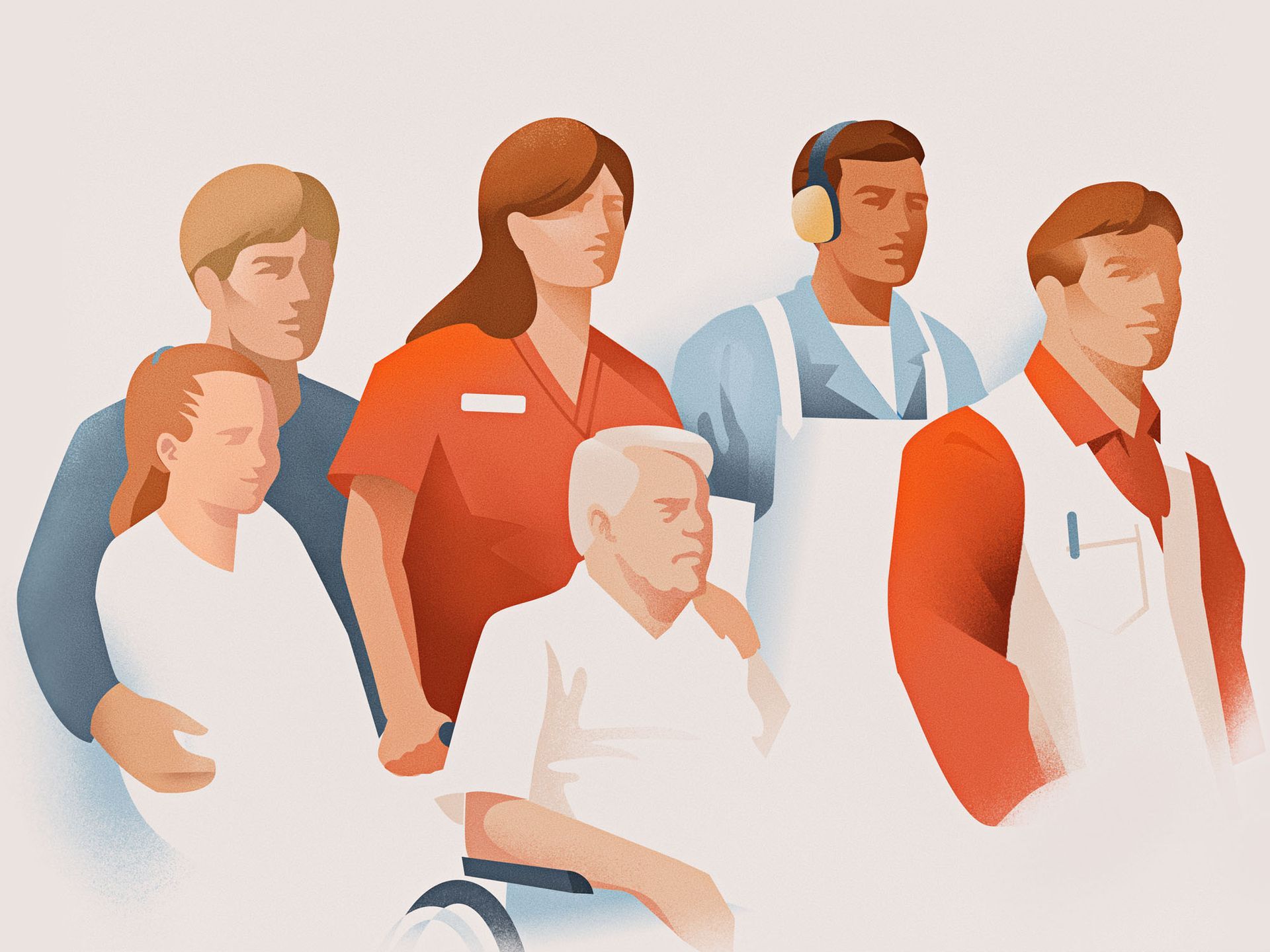
Get involved with Efling
Efling has a strong community of members who take an active part in union activities and help protect and advance the interests of the membership. Their involvement has played an important role in the results Efling has achieved in recent years.
We encourage you to get involved and become part of this community. Union activities are open to all members, regardless of background.
How can you take part?
Union representatives
Union representatives play a key role in Efling’s work. The union places strong emphasis on increasing their number and providing them with training and support. Under collective agreements, Efling members at workplaces with five or more Efling members may elect a union representative.
A union representative acts as a link between employees and the union at the workplace. Their role is to help ensure that collective agreements are followed and members’ rights are respected, as well as to support members with workplace-related issues. They also share information from the union with members and communicate workplace issues to the union when needed.
Union representatives attend a full-day training session each month from September to May. The training is demanding but rewarding, with a strong focus on practical skills and active participation. Training is provided in Icelandic and English.
To become a union representative, you must be a member of Efling, must not hold a managerial position with the authority to hire or dismiss other Efling members, and must have been elected or formally endorsed by your co-workers.
If you are interested in becoming a union representative or would like to help elect one at your workplace, you can find further information here.
The duties, appointment and role of union representatives are set out in regulations adopted by Efling’s Board.
The Delegate Council
The Delegate Council is the union’s highest decision-making body between general meetings. It consists of 130 members, including the members of the Executive Board. The Delegate Council serves a two-year term, beginning on 1 January in odd-numbered years and ending on 31 December of the following year.
The Delegate Council meets once a month during the winter season.
Further information about the Delegate Council can be found in Articles 15 and 26 of Efling’s statutes. The composition of the Council is generally based on a proposal from the Nomination Committee. Elections are held in November of the final year of the outgoing Council’s term.
As elections approach, an announcement is sent by email to all members and published on the union’s website. It may also be shared on the union’s social media channels. Members are invited to put themselves forward as candidates.
Serving on the Delegate Council is a good way to gain insight into the union’s work and take an active role in it. Meetings regularly cover developments in collective bargaining and other matters relating to the labour movement. The Chair presides over meetings, and guest speakers are sometimes invited. Open discussion is encouraged, and members may raise issues under “Other matters”.
Monthly meetings of the Delegate Council are held at Efling’s offices at 6 p.m. on Thursdays. The building opens half an hour before the meeting, and refreshments are provided. Meetings are interpreted between Icelandic and English, and an effort is made to provide materials in both languages. You can view the current members of the Delegate Council and meeting minutes here.
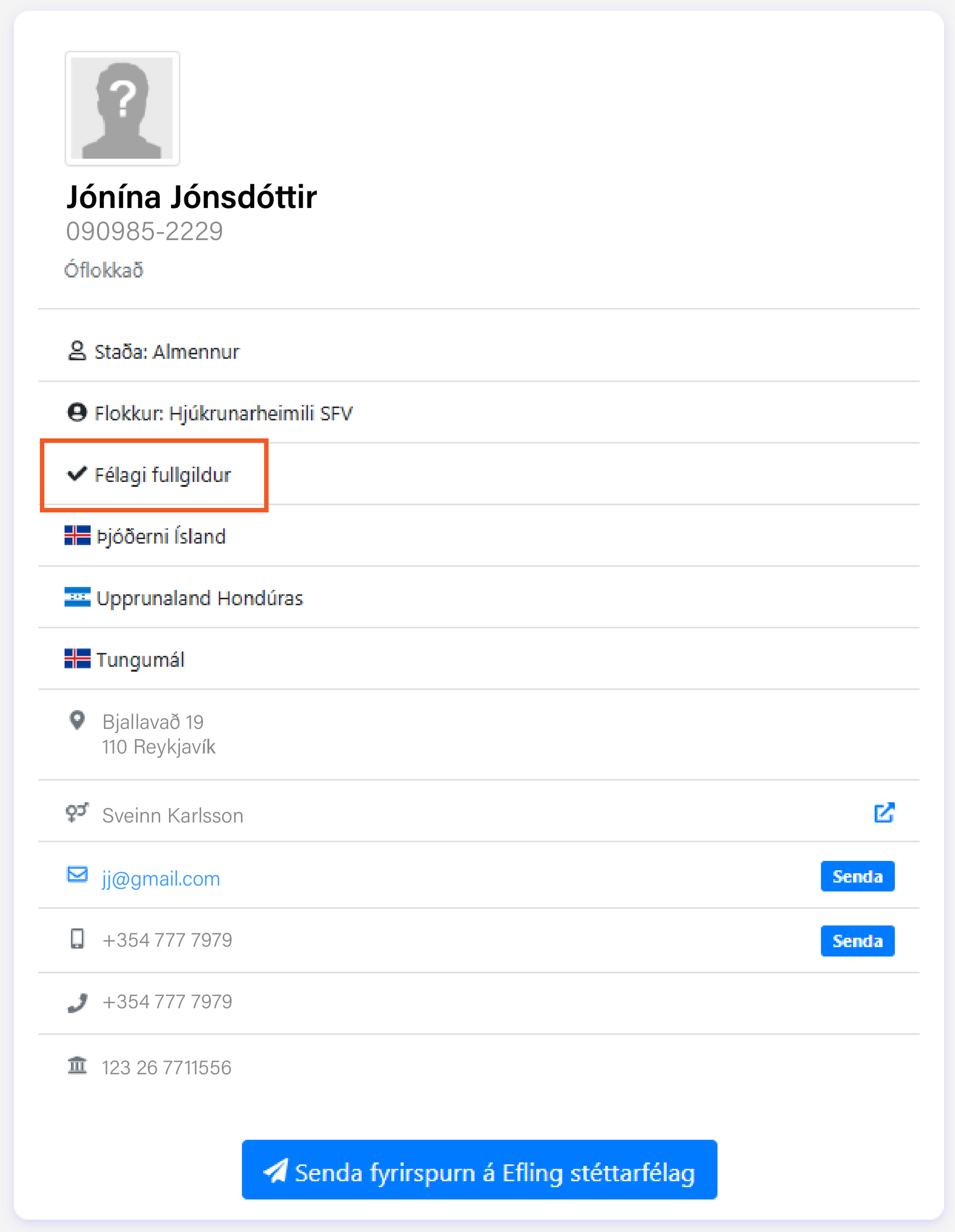
The only requirement for standing for election to the Delegate Council is that you are a full member of the union. Members automatically become full members after paying membership dues for six months, unless they have requested otherwise. You can check your membership status on your personal page under “My Pages”.
Efling's Board
The Board of Efling is responsible for the overall governance of the union between general meetings. Its members share collective responsibility for the union’s finances and assets. Board meetings are generally held once a month.
The Board consists of 15 members: the Chair, Vice-Chair, Secretary, Treasurer and 11 other Board members. Members serve two-year terms, and elections are held annually.
To ensure continuity, seven Board members are elected each year for staggered two-year terms. The Chair is elected for a two-year term. Elections to the Board and for the union’s auditors are held annually, no later than the end of March.
A five-member Nomination Committee operates within the union and proposes candidates for the Board and for the positions of auditor. When preparing its list of candidates, the Committee must take account of gender equality and representation from different occupational sectors.
All full members of Efling are eligible to stand for elected positions within the union.
The Nomination Committee’s list, List A, is made available at Efling’s offices eight days before the election. Other candidate lists must be submitted to the Election Committee no later than seven days before the election. Each list must be supported by 120 full members.
Board elections are conducted by secret ballot, either at an election meeting or by postal ballot. Members vote for one of the candidate lists presented.
Further provisions on voting rights, eligibility to stand for election and election procedures can be found in Chapter VI of Efling’s statutes.
Funds, committees and boards
Negotiation committees
Efling’s negotiating committees are made up of union members and play a key role in the union’s collective bargaining. Members are invited to join the committees when collective agreements are approaching expiry, and the committees remain active until new agreements have been reached. The Chair of Efling also chairs the negotiating committees. Efling places strong emphasis on having broad participation in its negotiating committees and on ensuring that their work is open and transparent to members.
The negotiating committees represent the union in collective bargaining and are given a broad mandate to do so. They attend negotiation meetings with the other parties and also hold their own meetings, which are convened and chaired by the Chair of Efling. Serving on a negotiating committee can involve a significant workload, but members may be entitled to attend meetings without loss of pay. The role of negotiating committees is set out in Efling’s statutes and in the Act on Trade Unions and Industrial Disputes.
Gildi Pension Fund’s Representative Council
Gildi Pension Fund’s Representative Council plays an important role in the governance of the fund. It consists of an equal number of representatives from the employee and employer organisations affiliated with the fund. Trade unions whose members belong to the fund, including Efling, appoint a total of 80 representatives to the Council. The number of representatives allocated to each union, including Efling, is determined every two years and is based on the proportion of total contributions paid to the fund by its members.
Efling’s representatives on the Representative Council vote on behalf of the union at Gildi’s annual general meeting and at other meetings of the Council. The Council discusses matters relating to the fund and receives information on its operations and key performance indicators.
The Council also confirms the appointment of member representatives to Gildi’s Board, elects representatives to the fund’s committees, including the Member Nomination Committee, and determines the remuneration policy and remuneration of Board members. The Member Nomination Committee proposes candidates to represent fund members on Gildi’s Board.
To ensure that Efling members have a strong voice in the governance of Gildi, it is important that full members are willing to participate. All full members of Efling who meet the eligibility requirements may put themselves forward for a seat on the Representative Council and contribute directly to decisions affecting the future of their pension rights.
Further information about Gildi’s Representative Council can be found in the fund’s Articles of Association here.
The Efling Congress
Full members can take part in the Efling Congress, a forum where members come together to discuss the union’s current position and priorities and put forward proposals for future action.
The Efling Congress gives members an opportunity to influence the union’s policies and activities, express their views and take part in discussions on issues that matter to them.
The Congress is an important part of Efling’s democratic work. It can address a wide range of issues, including wages, employment rights, workplace matters, the union’s services and its future priorities.
Taking part in the Efling Congress may be of particular interest to members who want to:
- influence the union’s policies and priorities
- share members’ experiences and perspectives
- take part in discussions about members’ rights and interests
- gain a better understanding of the union’s work
Resolutions, speeches, news, photographs and minutes from the 2026 Efling Congress are available here.
The ASÍ Congress
The Congress of the Icelandic Confederation of Labour, ASÍ, is the confederation’s highest decision-making body. It is held every two years and elects the President and Central Executive Board of ASÍ. The Congress also decides on amendments to the confederation’s statutes and adopts policy resolutions.
Each ASÍ member union is entitled to send delegates to the Congress. The number of delegates allocated to each union is determined by its membership. In total, around 300 delegates representing workers from across Iceland come together to shape the confederation’s policies and programme of work and to elect its leadership.
All full members of Efling may put themselves forward to serve as delegates to the ASÍ Congress and thereby have a direct influence on the future of the labour movement. The Nomination Committee prepares a proposed list of delegates based on the nominations received and submits it to the Delegate Council for approval.
Keep an eye on announcements about nominations and elections on Efling’s website and via email. To make sure you don’t miss anything, it is important to update your contact details, including your email address and phone number, on your personal page under “My Pages.”
For further information, contact us at
felagsmal@efling.is.