This week, UNI Europa, the European federation of service sector unions, presented Efling’s success to Members of the European Parliament in Strasbourg. The Parliament is currently working on new public procurement rules that will apply across Europe.
UNI Europa is using Iceland’s example to show that respect for collective agreements can be guaranteed in public tenders. This is a key demand of UNI Europa’s campaign “No public contract without collective agreement”.
What did Efling achieve?
Last week, the Ministry of Finance and Economic Affairs published new guidelines for
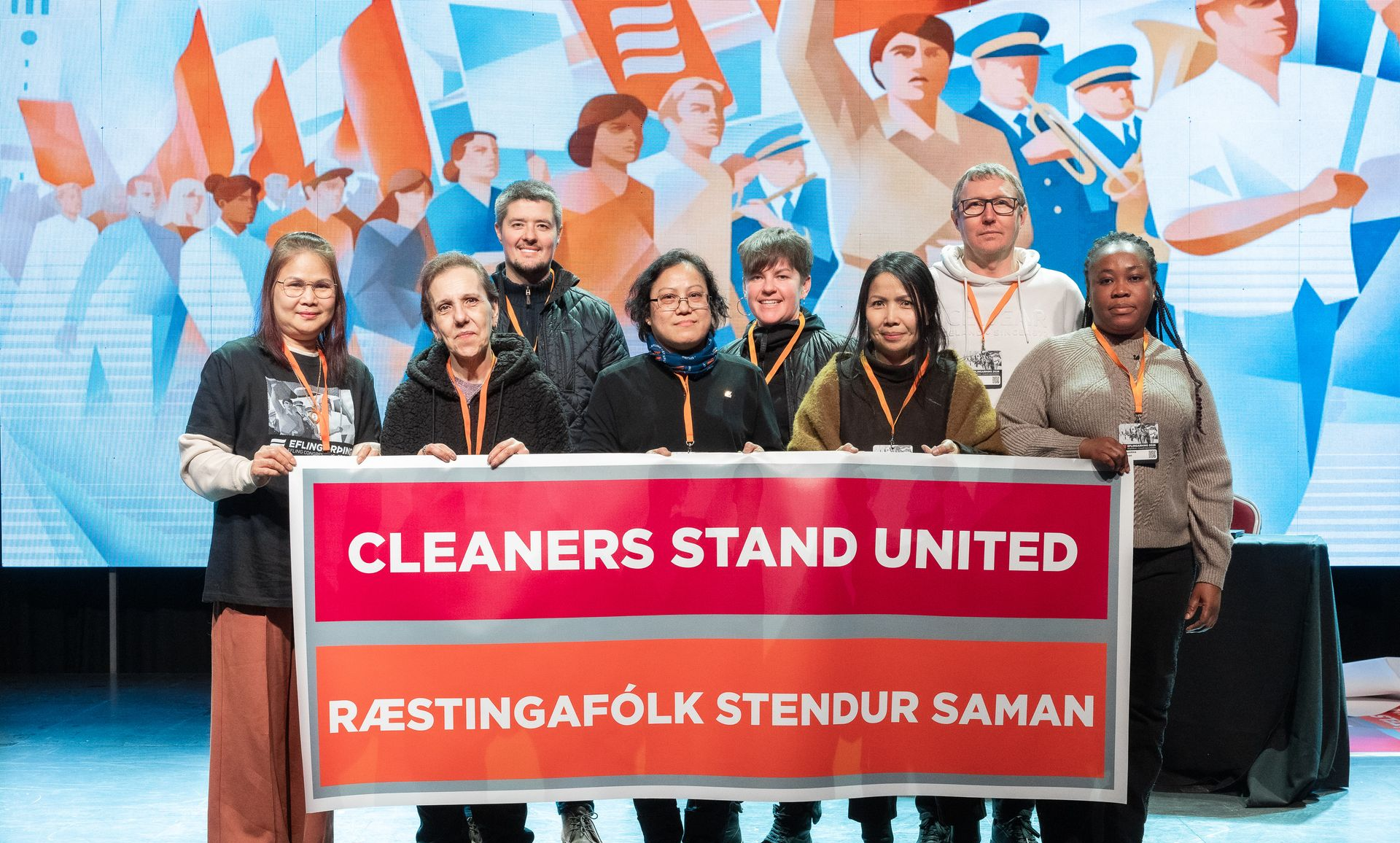
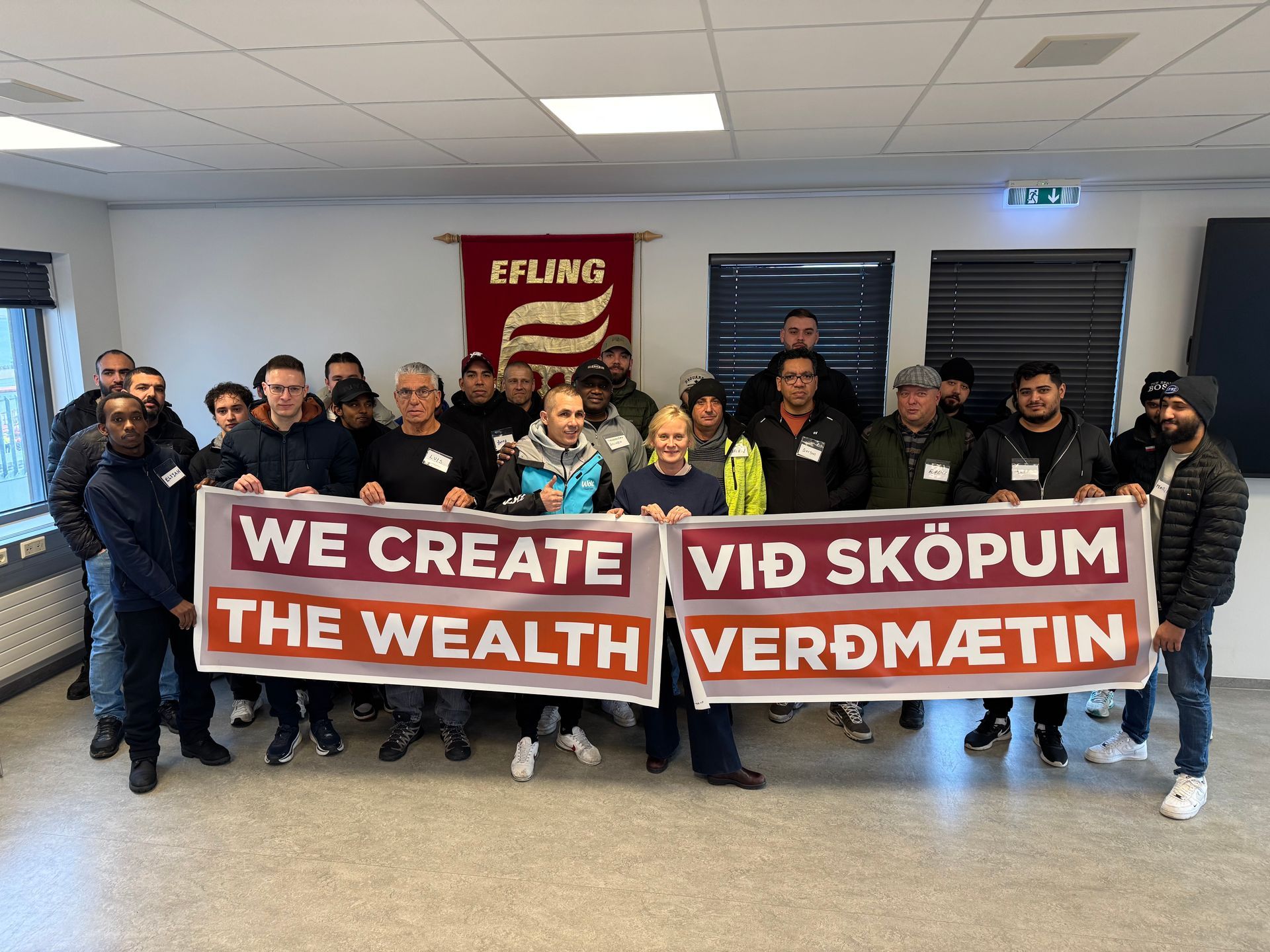
the state’s cleaning tenders. They are the first guidelines of their kind in Iceland. They were developed in consultation with Efling and the Federation of General and Special Workers in Iceland (SGS), after a long fight by Efling against undercutting in the cleaning sector.
Under the guidelines, every bidder must declare that it follows collective agreements and the law, and the workers’ union must confirm the declaration. For jobs larger than 1,000 square metres, an independent party assesses how many hours the work will take. Bids based on a higher workload than the collective agreement allows must be rejected. The guidelines apply to state institutions such as the University of Iceland, Landspítali – The National University Hospital, upper secondary schools and the State Alcohol and Tobacco Company (ÁTVR).
The goal is that companies can no longer win tenders by offering a low price at the expense of cleaners.
A fight that reaches beyond Iceland
The European Union is working on a new regulation on public procurement to replace three older directives. A lot is at stake, as the rules cover around
2,500 billion euros of public money. UNI Europa represents seven million workers in the service sector. It has long fought against contracts being awarded on price alone. This has led to a race to the bottom in public tenders, and low-paid workers pay the price.
UNI Europa welcomes that the European Commission’s proposal recognises the importance of collective agreements and moves away from lowest-price tendering. However, the federation says the proposal does not go far enough. It demands that companies with collective agreements are always given preference. The EU has set a target that collective agreements should cover 80% of workers in every member state. UNI Europa points out that public procurement is one of the most effective ways to reach that target. That is why the federation has
highlighted Iceland’s example and called on the EU to follow the same path.
“It means a great deal to us, and especially to the members who stood behind this fight, that our win is being noticed and discussed at EU level,” says Sólveig Anna Jónsdóttir, chairman of Efling. “Our experience shows exactly why public procurement rules matter. When public bodies award contracts to companies that undercut collective agreements, it is the lowest-paid workers who pay the price.”
Efling fully supports UNI Europa’s fight against social dumping in public tenders.